Your operation requires consistent cleaning schedules customized for specific risks, processing volumes, food allergens, and inspection schedules, including verifiable documentation validating HACCP requirements, inspection compliance, and public health regulations. The information following give guidance on sanitation program requirements.
Important Highlights
- Food safety cleaning professionals from Brampton support restaurants, grocery departments, commissaries, warehouses, bakeries, schools, mobile vendors, and allergen-sensitive operations.
- They sanitize frequently contacted areas, food-contact equipment, kitchens, floors, drains, restrooms, and storage areas using area-specific procedures to reduce cross-contamination.
- Validation of proper chemical concentration, alignment, and contact time is conducted by certified providers, with completion filed using swabs, inspections, and corrective-action records.
- Hygiene calendars should follow risk, output capacity, format changes, incidents, and regulations, with daily, recurring, and periodic activities allocated by location.
- Highlight vendors displaying HACCP, public-health understanding, safety training training, coverage, testimonials, coded instruments, and inspection-ready maintenance documentation.
Which Brampton Facilities Need Food Safety Cleaning?
Any Brampton facility that handles, maintains, prepares, packages, or offers food needs hygiene cleaning. You must implement it if your establishment falls under public health review, food rules, or HACCP systems. That requirement covers eateries, dining facilities, food distribution centers, supermarket departments, meat markets, fish counters, corner stores, and commercial kitchens.
Compliant food safety cleaning remains necessary in supply warehouses, processing plants, freezer locations, commercial bakeries, school food programs, reception facilities, and food delivery centers. Mobile and temporary operations matter as well, like catering vehicles, festival vendors, and pop-up establishments. Your facility needs documented cleaning protocols whenever your staff work with ingredients, section ready-to-serve foods, heat finished items, or maintain allergen storage. In Brampton, hygiene stays optional; it forms part of lawful, operational, and customer protection standards.
What Do Brampton Cleaning Experts Clean?
You need professional cleaners who disinfect frequently contacted areas, kitchen areas, floor surfaces, and bathrooms to meet food safety and public health standards. They focus on these spaces because they present the highest risk for contamination spread, slipping risks, and sanitation breaches.
By understanding their service scope, you can make learn more sure your operation's sanitation protocols satisfy all operational and regulatory requirements.
High-Touch Surface Sanitizing
Sanitation in Brampton services emphasize high-touch surface cleaning due to the potential of microbes and residue distributing across the location. You must have a scheduling system for disinfecting all high-touch items including handles, plates, switches, railings, control surfaces, POS systems, and refrigeration equipment. Implementing contact point analysis, professionals locate every regularly used zone and determine cleaning schedule
By replacing wipes, maintaining sequential systems, and segregating sanitization equipment according to area, you maintain a quantifiable, justified, and ready for inspection sanitizing plan.
Cooking Zones, Walking Surfaces, and Restroom Environments
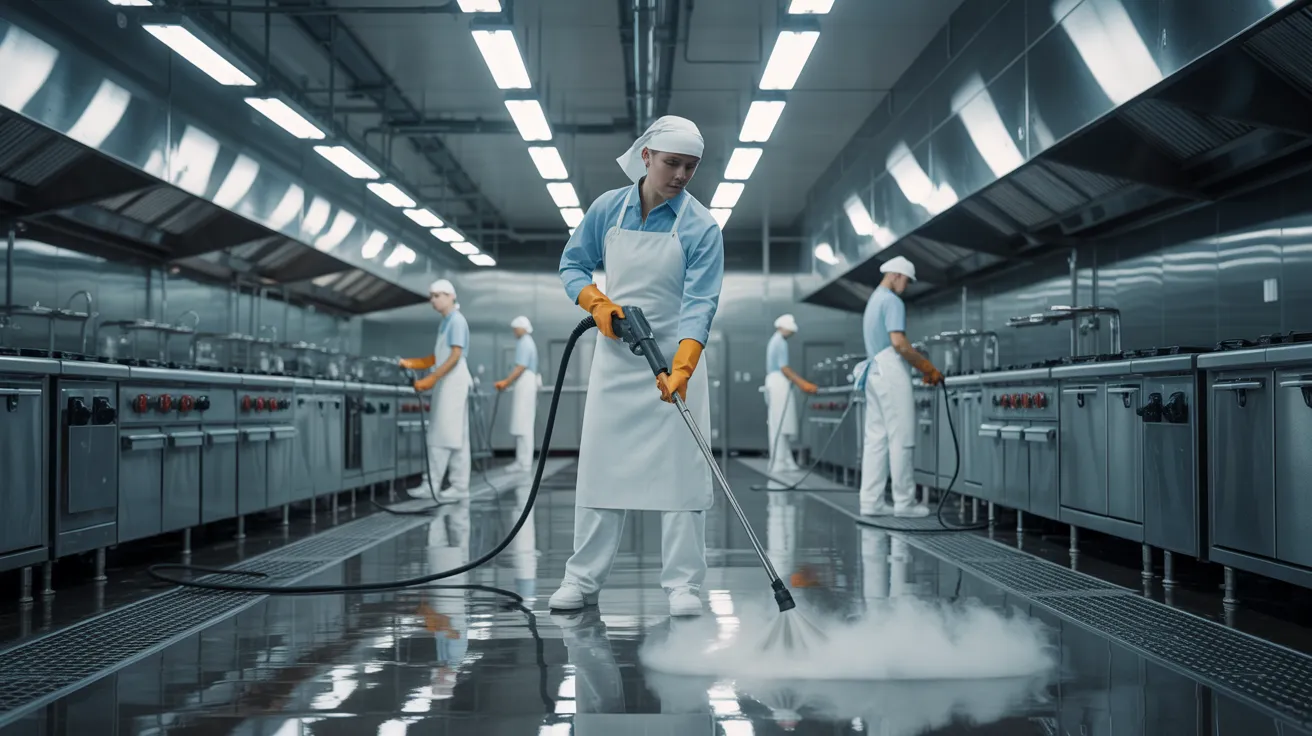
Brampton cleaning professionals will address kitchens, floors, and restrooms since each space presents different hygiene concerns, slip-and-fall, and public health challenges. In industrial kitchens, you need grease removal from cooking stations, appliance surfaces, drain systems, preparation areas, and backsplashes to reduce contamination and pest pressure.
Professional floor care with documentation is also included. is also provided as part of the service.
Restroom cleaning involves disinfecting surfaces, fittings, separators, dispensers, and containers, restocking supplies and controlling odours. They also service restaurant moprooms, where chemical storage, sink hygiene, and drainage conditions can affect sanitation compliance and staff safety daily.
How Food Safety Cleaning Benefits Brampton Operations
In Brampton, you must maintain sanitary cleaning practices to satisfy health code requirements and achieve compliance. You also minimize cross-contamination by cleaning and sanitizing food-contact surfaces, equipment, and high-touch areas correctly. Most importantly, you help protect community wellness by reducing the chance of food poisoning in your establishment.
Regulatory Code Requirements
Because Brampton food operations operate under strict public health standards, food safety cleaning directly determines your competence to adhere to health code requirements, ensure the safety of customers, and prevent enforcement action. You must maintain sanitary food-contact surfaces, verifiable cleaning logs, safe chemical management, and documented employee protocols that meet municipal and provincial inspection expectations.
When inspectors assess your operation, they analyze whether your sanitation system supports secure product handling, machinery hygiene, trash control, and facility cleanliness.
Cross-Contamination Avoidance
Meeting health code standards also depends on your capacity to stop cross-contamination during routine food preparation and sanitation. You must keep raw items away from prepared dishes, sanitize prep surfaces between tasks, and keep cleaning products separate from food areas. Clear procedures reduce transfer risks and ensure ongoing adherence to health checks.
Building allergen segregation prevents priority allergens from contacting shared surfaces, containers, or equipment. Leverage separate cutting boards, colored implements, and precise instrument labeling so staff don't mix items in cooking or serving.Enforce handwashing after handling raw meat, seafood, eggs, or allergen-containing products. Refresh cleaning cloths frequently, and confirm disinfectant efficacy using test strips. When your team follows these practices each shift, you foster a cleaner, more secure operation that meets Brampton's food safety expectations consistently.
Public Health Protection
When sanitation efforts weaken, you don't only face inspection setbacks—you raise the likelihood of foodborne illness affecting customers, staff, and the larger Brampton community. You also undermine your responsibility in safeguarding community wellness, especially in busy food facilities where pathogens travel quickly through surfaces, equipment, and touchpoints.
You must establish sanitation protocols that eliminate soils, sanitize properly, and confirm effectiveness. This requires following contact periods, employing authorized sanitizers, documenting procedures, and instructing staff to satisfy regulatory standards. These mechanisms support disease prevention by limiting pathogens before reaching food or hands. Across Brampton, strong cleaning safeguards vulnerable groups, limits outbreak risk, and demonstrates accountability. When you maintain proper protocols, you go beyond requirements—you meaningfully reduce risk and facilitate secure food handling city-wide.
How Does Cleaning Support Food Safety Compliance?
Maintaining thorough cleaning protocols supports food safety compliance by decreasing contamination threats, limiting pathogen development, and keeping your facility in accordance with sanitation requirements under HACCP-based programs and public health regulations. You confirm that food-handling surfaces remain visibly clean and microbiologically controlled, enabling documented preventive controls and inspection readiness.
Cleaning programs additionally bolster allergen management by clearing residues that can cause undeclared allergen exposure.
Determining When to Arrange Commercial Cleaning
You'll find the best results from cleaning plans that incorporate risk levels, output volume, and legal mandates rather than a unchanging calendar system alone.
Drains, vents, storage racks, and hard-to-reach equipment zones call for weekly or every month cleaning, informed by inspection data and sanitation logs.
How Do You Choose Brampton Cleaning Experts?
Start by screening providers against food-safe sanitation requirements, not price alone. You should verify that each company understands CFIA, public health, and HACCP-aligned expectations relevant to your facility. Ask for proof of insurance, WHMIS compliance, documented staff training, and supervision practices. Review whether technicians understand cross-contamination risks, chemical handling, and traceable sanitation records.
Additionally, you need to evaluate operational reliability and accountability. Obtain references from Brampton food operations, then review service speed, corrective-action procedures, and communication practices. Verify the company supports supplier audits and can deliver inspection-ready documentation when inspectors or external parties need proof. Verify equipment upkeep, color-coded equipment are applied correctly, and location-specific dangers are identified. A qualified provider ensures compliance, product quality, and your brand reputation.
Which elements are part of a Food Safety Cleaning Plan?
Develop a written plan that clarifies every sanitation task, standard, and responsibility before production begins. You should detail cleaning frequencies, approved chemicals, dilution rates, contact times, tools, and verification methods for each location, surface, and apparatus. Include pre-operational inspections, corrective actions, and employee training requirements.
Your plan should also cover contamination prevention, garbage management, pest control procedures, and recorded timelines for bathrooms, drainage systems, surfaces, and food-preparation zones. Detail how you'll separate raw and ready-to-eat processes, support ingredient tracking, and ensure accurate allergen labeling through validated cleaning between product changes. You should designate accountability, keep signed records, and review results against regulatory standards, HACCP controls, and customer requirements. When gaps appear, update procedures immediately and retrain staff.
Frequently Asked Questions
Do cleaning services work during nighttime hours at Brampton properties?
Yes, you can arrange sanitation coverage to support nighttime operations in Brampton facilities. You'll coordinate nighttime cleaning around operational windows, security measures, and staffing requirements. Services generally map overnight logistics to reduce disruption, ensure compliance, and record finished work. You should verify response times, supervision, access protocols, and waste handling before beginning service. If you operate regulated spaces, you'll also want cleaning records that support inspections and compliance verification.
Are hazard containment services available from sanitation professionals?
Yes, you can find many Brampton cleaning professionals offering emergency response services. They manage hazardous materials, assess dangers, isolate zones, and perform swift decontamination to minimize risk and prevent disruption. You should confirm timeframes, training credentials, safety measures, and disposal methods. If your facility must meet standards, pick a provider that documents incidents, maintains standards, and supports audits.
Do plant-based disinfectants operate safely on food-contact surfaces?
In essence, natural disinfectants are safe for surfaces contacting food provided you choose products labeled food safe that satisfy regulatory standards. Check contact duration, mixing proportions, and rinse requirements before use. Plant based formulas reduce toxic chemical contact, although you require demonstration of efficacy against specific pathogens. To ensure residue-free areas, stick to manufacturer directions precisely and validate the sanitizer complies with applicable food industry sanitation standards.
Will cleaning schedules respond to seasonal variations?
Yes, you can adjust sanitation programs for production fluctuations. You should adjust schedules, staffing, disinfectants, and confirmation procedures to align with seasonal patterns while maintaining regulatory adherence. You'll lower operational delays by scheduling cleaning around production shifts, peak volumes, and operational patterns. You should additionally revise procedural documents, training, and environmental testing to reflect temporary risks, novel allergens, or increased soiling. Continuous reviews preserve your schedule current.
Do professional cleaning services train employees on hygiene standards?
Yes, professional cleaning services typically educate your team on sanitation best practices. You receive staff training on proper chemical use, exposure periods, contamination control, machine breakdown, and documentation. They generally follow training with HACCP, GMP, and CFIA or local public health regulations. Many perform sanitation audits to confirm adherence, spot deficiencies, and reinforce corrective actions. This helps you maintain consistent procedures, pass inspections, and minimize contamination hazards regularly.
Closing Remarks
By collaborating with Brampton food safety and commercial cleaning experts, you aren't simply tidying—you keep your operation inspection-ready and your standards in compliance. From kitchens to processing floors, every clean surface and maintained corner decreases contamination and avoids expensive losses. By scheduling cleanings on the right schedule and adhering to a systematic cleaning protocol, you secure staff members, clients, and your standing. In a heavily controlled environment, clean spaces are mandatory—they're essential to successful operations.